

Everybody Needs a Rock: A Therapist’s Reflection on Rocks, Wonder, and Nervous System Healing

By CDT Therapist, Jamie Fiorucci, LMSW
Recently, while listening to a podcast about rocks and their therapeutic effect on the nervous system, the speaker talked about the children’s book Everybody Needs a Rock by Byrd Baylor. What initially sounded like a simple children’s story quickly revealed itself to be something much deeper: a gentle invitation into mindfulness, wonder, and connection.
As a therapist, and someone who has loved rocks since childhood, I found myself unexpectedly moved.
At its heart, Everybody Needs a Rock is about exactly what the title suggests: finding your own special rock. The book offers whimsical rules for discovering one, encouraging patience, curiosity, and intention. It sounds simple, and perhaps even playful, but beneath the surface is something deeply regulating for the nervous system.
It reminded me that sometimes healing comes in the smallest, quietest ways.
A Childhood Filled with Stones and Wonder
My relationship with rocks began long before I understood words like “grounding” or “mindfulness.”
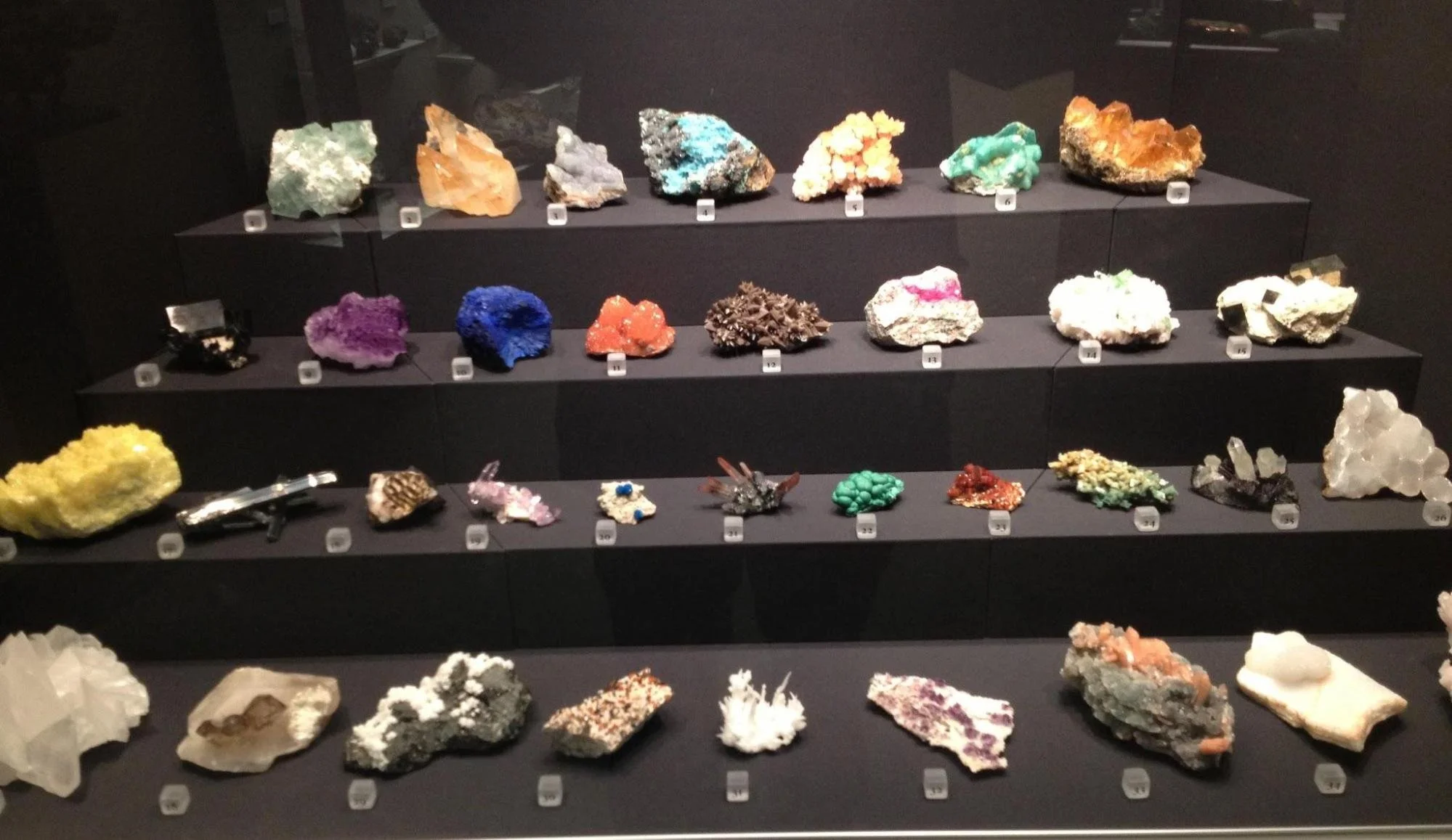
Growing up, my great-grandparents spent winters traveling through Arizona and New Mexico, escaping our very long northern winters. During their travels, they loved attending rock and gem shows, choosing stones they found beautiful, unusual, or simply captivating.
They brought home treasures: slabs of petrified wood, amethyst, tiger’s eye, turquoise, and many other stones gathered from landscapes I could only imagine as a child.
One of my favorite pieces was a medium sized slab of petrified wood, which now rests quietly on my bedroom windowsill. Other stones found their way into family spaces over the years.
My grandparents kept a glass pint jar filled with small stones on the living room mantle. As a child, I would sit nearby and stare at them for long stretches of time. I noticed their shapes, colors, textures, and sizes. I wondered where they came from and imagined distant deserts, mountains, and hidden mines.
Many stones, such as malachite, turquoise, and specialized quartz, are connected to specific places and histories. Turquoise, especially, often carries names tied to distinct mining regions. There is something fascinating about holding a piece of the earth that traveled such a long journey.
Even then, rocks felt like tiny storytellers.
Why Rocks Feel Therapeutic
As Mental Health Awareness Month invites us to think more intentionally about wellbeing, I want to offer something perhaps unexpected:
Rocks can be wonderful companions for mental health.
We often think of coping skills as breathing exercises, journaling, movement, or mindfulness apps. Rarely do we think about rocks.
But maybe we should.
Holding a stone can become a grounding practice. Feeling texture, weight, temperature, and shape invites us back into the present moment. Rocks naturally engage the senses, helping regulate an overwhelmed nervous system.
They encourage us to slow down.
To notice.
To become curious.
In therapy, we often talk about using the five senses to anchor ourselves during moments of anxiety or overwhelm. A meaningful rock can quietly support this process.
What does it feel like?
Is it smooth or rough?
Warm or cool?
Heavy or light?
Does it smell like earth after rain?
What memories or feelings arise when you hold it?
A rock can become a pocket-sized reminder that you are here, now.
Finding the Right Rock
One thing I deeply appreciated about Everybody Needs a Rock is that it doesn’t rush the process.
You do not simply grab any rock.
You find your rock.
When I visit Seiche Stone Company in Marquette, MI, I rarely go in with a specific crystal or intention in mind. Instead, I try to quiet myself first.
I walk through the store slowly.
I clear my thoughts.
I feel my feet on the ground.
I let myself settle into my body.
Only then do I begin looking.
Interestingly, I do not start by reading what the stones are “for.” I simply pay attention to what catches my attention. What keeps drawing my eye? What feels quietly magnetic?
Eventually, my focus narrows. I feel myself pulled toward a particular shelf, a particular stone, a very specific spot.
This is how I find my rocks.
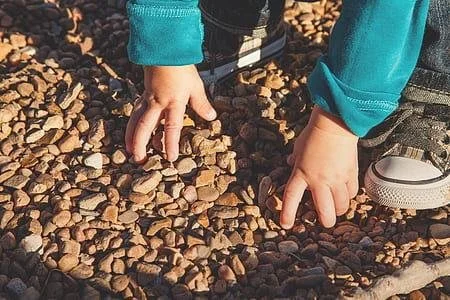
Sometimes it happens in a crystal shop. Other times, it happens naturally, in the woods, on the beach, along a trail, or even on my gravel driveway.
The location does not matter nearly as much as the relationship.
You Don’t Have to Keep Every Rock
An important lesson rocks have taught me is this: connection does not always mean possession.
I do not keep every rock I pick up.
Sometimes, I simply hold one for a while. I notice it. Appreciate it. Turn it over in my hands. Wonder about where it came from and how long it has existed.
And then I gently place it back where I found it.
Other times, if something feels especially meaningful or intentional, I bring the stone home.
Like my petrified wood on the windowsill, these rocks eventually settle into quiet corners of daily life, on a dresser, dining room table, kitchen windowsill, or bookshelf.
Scattered throughout my home, they become subtle companions.
I’ve also noticed that changing their placement from time to time changes the feeling of a space. Maybe it is symbolic, maybe energetic, maybe simply the power of intention, but I find comfort in the ritual.
And comfort matters.
A Different Kind of Coping Tool
As a therapist, I often encourage people to build coping strategies that feel authentic and accessible.
Not every coping skill works for every person.
But if you have ever felt calm near water, collected shells on a beach, paused to admire stones on a trail, or found yourself absentmindedly rubbing a smooth object in your pocket, perhaps rocks are already speaking your language.
The next time you are outside, consider finding a special rock.
Place it in your pocket.
Hold it in your hand.
Notice its texture.
Use your senses.
Let yourself be curious.
Allow wonder back into the moment.
And perhaps, over time, you will discover something unexpected: a quiet partnership between you and something ancient, steady, and grounding.
After all, maybe everybody really does need a rock.
Just don’t be greedy.
Be curious.
Keep it simple.
Choose thoughtfully for your new partnership.
Happy May Mental Health Awareness Month!
With Gratitude, Rock On!
Jamie Fiorucci, LMSW 💚
Disclaimer:
The information shared in this blog is for educational and informational purposes only. It is not a substitute for professional mental health treatment, diagnosis, or medical advice. Reading this blog does not create a therapist–client relationship with Caught Dreamin’ Therapy or any of its providers.
If you are experiencing a mental health concern, please contact a licensed professional in your area. If you are in crisis or need immediate support, call 911 or visit your nearest emergency room. In Michigan, you can also reach the 24/7 Crisis & Access Line at 988.